


Pet Hair Loss: Hormonal Imbalance, Parasites, or Skin Condition?
Your pet’s coat is one of the clearest windows into their overall health, so when it starts thinning in patches or bald spots appear without an obvious reason, it’s natural to feel worried. Alopecia (the medical term for hair loss) can spring from hormonal disorders that quietly slow hair growth from the inside, or from skin conditions that create enough discomfort to make your pet scratch and lick until the fur is gone. Sometimes both are happening at once. Without proper investigation, it’s easy to treat the wrong thing and leave your pet uncomfortable.
At Fairfax Veterinary Clinic, we approach hair loss by looking at the full picture of your pet’s health. Our wellness evaluations include coat and skin screening, and when something looks off, we dig deeper with diagnostics to separate hormonal causes from dermatologic ones. If your pet’s coat has changed, contact us so our team can get to the root of the problem and put together a plan that actually addresses it.
Shedding vs. Alopecia: Knowing the Difference
Alopecia is a symptom, not a diagnosis. Something underneath (skin, immune system, or hormones) is driving the hair loss, and the treatment depends entirely on which it is.
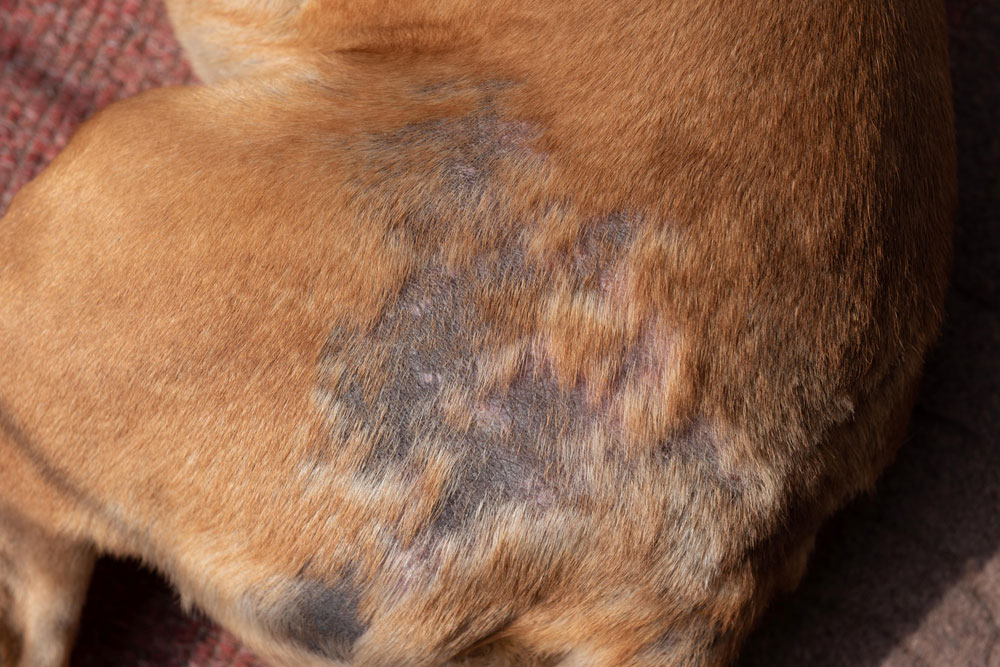
Normal shedding is diffuse, the coat looks full, and the skin underneath is healthy. Alopecia looks different:
- Actual bald patches where you can see skin
- Localized thinning in specific areas rather than overall shedding
- Redness, scaling, or thickened skin beneath the bald area
- Hair that grows back with a different texture, color, or fails to regrow
- Focused scratching, chewing, or licking concentrated in one area
- Coat changes accompanied by other symptoms like lethargy or increased thirst
Any of these warrants a conversation with our team.
Allergies: The Most Common Cause of Itch-Driven Hair Loss
Atopic dermatitis occurs when the immune system overreacts to environmental triggers, including the tree and grass pollens abundant in Marin County’s green landscape. The resulting inflammation drives intense itching, and the scratching, licking, and chewing that follow are what create bald spots and damaged skin.
Allergies in dogs typically concentrate in the paws, face, armpits, and groin. Flea allergy in cats causes intense itching at the tail base and rump, and because cats are meticulous groomers, visible fleas are often absent entirely despite being the cause.
Allergy patterns in Fairfax tend to be year-round or multi-seasonal given the mild coastal climate. A pet with recurring skin problems that improve and return on a predictable cycle is worth allergy testing rather than treating each flare reactively.
Parasites and Skin Infections
Even indoor pets can acquire parasites, and the most diagnostically significant ones are microscopic.
Parasitic causes:
- Mites: multiple species cause distinct presentations; microscopic diagnosis is necessary to differentiate
- Demodex mites: patchy hair loss on the face and paws; more common in puppies or pets with compromised immunity; not contagious to other pets or people
- Sarcoptic mange: intensely itchy, contagious, and capable of spreading to people; causes crusting and hair loss on the ears, elbows, and belly
- Ringworm: a fungal infection producing circular, scaly bald patches; transmissible to people; confirmed by fungal culture
Bacterial and yeast infections: secondary to allergies or other skin disruption; cause redness, odor, scaling, and progressive hair loss. Skin cytology (examining cells from the skin surface under a microscope) identifies the organism and guides antibiotic or antifungal selection.
Year-round parasite prevention is the foundation of protection against parasitic hair loss. Our team can help you choose the right parasite control products for your pet’s lifestyle and our local parasite environment.
Hormonal Causes: What to Look For
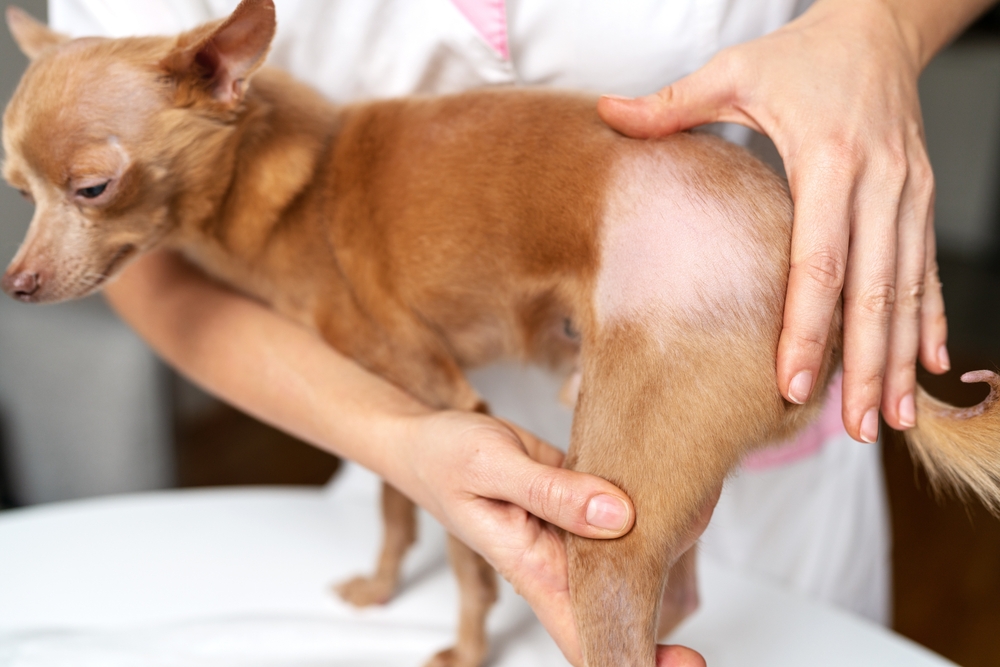
When hair loss is symmetrical, distributed on both sides of the body in the same pattern, and not accompanied by much scratching, hormones are usually involved. These changes develop slowly, which makes them easy to attribute to normal aging.
Hypothyroidism in Dogs
Hypothyroidism is among the most common endocrine diagnoses in middle-aged dogs. Insufficient thyroid hormone slows metabolism throughout the body, producing weight gain, low energy, cold sensitivity, and a thinning, dull coat on the trunk and tail. Treated easily with daily supplementation once confirmed on bloodwork.
Cushing’s Disease in Dogs
Cushing’s disease (hyperadrenocorticism) produces symmetrical hair loss on the sides of the body alongside a pot-bellied appearance, increased thirst and urination, panting, and thin skin. The coat changes from Cushing’s look strikingly similar to normal aging until other signs accumulate.
Hyperthyroidism in Cats
Feline hyperthyroidism drives weight loss despite a ravenous appetite, increased vocalization, restlessness, and a rough, unkempt coat. One of the most common diagnoses in older cats and very treatable once identified.
Sex Hormone Imbalances
Testicular tumors in intact male dogs can produce excess estrogen causing symmetrical hair loss and skin pigment changes. Intact female dogs can develop similar changes from ovarian cysts. Spaying or neutering often resolves these cases.
One less obvious source of hormonal disruption worth mentioning: topical hormone creams used by people in the household. Estrogen, progesterone, and testosterone preparations applied to the skin can transfer to pets through casual contact, particularly in dogs and cats who sleep in the bed, cuddle on the couch, or rest against their person’s legs. Secondary exposure to these hormones can cause hair loss, nipple enlargement, swollen vulvas in female pets, and other hormonal signs that look identical to an internal hormonal condition. If your pet has unexplained symmetrical hair loss and someone in the household uses a topical hormone cream, that exposure is worth mentioning when you come in.
Routine bloodwork during wellness visits establishes thyroid, adrenal, and organ baselines that make early hormonal shifts detectable before coat changes become significant.
Breed-Specific Coat Conditions
Some dogs inherit coat conditions that have no cure but can be managed comfortably.
- Color dilution alopecia: progressive hair breakage and loss in dogs with diluted coat colors (blue Dobermans, Weimaraners)
- Flank alopecia: seasonal, recurring bald patches on the sides; common in Boxers and Bulldogs; typically self-limited
- Sebaceous adenitis: destroys oil glands in the skin, producing scaling and hair loss; Standard Poodles predisposed
- Zinc-responsive dermatosis: crusting and hair loss around the face in Siberian Huskies and Malamutes; responds to zinc supplementation
Stress, Pain, and Overgrooming in Cats and Dogs
Psychogenic alopecia occurs when cats express emotional distress or physical discomfort through repetitive grooming that creates smooth, symmetrically thin patches. The skin underneath looks completely normal because hair is being removed rather than falling out from skin disease. This pattern is distinctive and helps separate overgrooming from medical hair loss. Feline life stressors including household changes, new animals, and routine disruption are common triggers.
In dogs, a lick granuloma is a thickened lesion on a limb from repetitive licking, often driven by underlying boredom, anxiety, or pain that perpetuates a self-reinforcing cycle. Osteoarthritis can cause licking of a painful joint, and feline idiopathic cystitis can drive overgrooming over the belly in cats who cannot communicate discomfort otherwise. If hair loss is occurring in a specific area, pain is worth investigating.
How Nutrition and Grooming Affect Coat Health
The skin and coat reflect nutritional status early: protein, essential fatty acids, zinc, and biotin are all necessary for normal hair growth. A pet eating an otherwise high-quality diet that does not match their individual needs may show it in coat quality before other symptoms develop.
Regular grooming distributes natural oils, removes debris, improves circulation to the skin, and gives you the chance to notice changes early. Our grooming services complement medical skin care by maintaining coat condition between veterinary visits, including using medicated shampoos and taking care of parasite problems like fleas. Overbathing or using inappropriate products strips the natural oils that protect the skin barrier, making it more vulnerable to both allergens and infection.
The Diagnostic Process
A hair loss workup at Fairfax Veterinary Clinic starts with history and builds from there.
- Take a thorough history: when it started, whether your pet is itchy, any household changes, diet changes, outdoor access, known tick or flea exposure
- Map the pattern: location and distribution of hair loss, skin texture and condition beneath the bald area, signs of secondary infection
- Perform skin scrapings: detects mites by microscopic examination of material collected from the skin surface
- Run cytology: identifies bacterial or yeast overgrowth, inflammatory cells, or other cellular findings
- Culture for ringworm: when ringworm is suspected; takes 7 to 14 days for a reliable result
- Run bloodwork and endocrine panels: when symmetrical, non-itchy hair loss suggests a hormonal cause
- Trial an elimination diet: when food allergy is suspected, using a novel or hydrolyzed protein for 8 to 12 weeks
The key is that our team does not stop at the first plausible explanation. The collaborative culture at Fairfax means cases get discussed and reviewed when the initial picture is unclear.
Treatment Matched to Diagnosis
| Cause | Approach |
| Environmental allergies | Anti-itch medications, medicated topicals, omega-3 support, immunotherapy |
| Food allergy | Elimination diet; long-term management on confirmed safe food |
| Flea allergy | Year-round prescription prevention; treat all household animals |
| Demodex | Targeted prescription miticides; immune support |
| Sarcoptic mange | Treatment of pet and environment; decontamination of household |
| Bacterial/yeast infection | Antibiotics or antifungals guided by cytology |
| Ringworm | Antifungal therapy; household decontamination |
| Hypothyroidism | Daily levothyroxine; regular thyroid monitoring |
| Cushing’s disease | Medical or surgical management; ongoing monitoring |
| Stress and pain related overgrooming | Environmental enrichment; pain treatment if applicable |
Frequently Asked Questions
How long does it take for hair to grow back?
It depends on the cause. Parasite-related hair loss typically improves within four to six weeks of treatment. Hormonal conditions may take three to six months for visible coat regrowth after starting medication. Some breed-related conditions do not fully regrow but improve with supportive management.
Can my pet’s hair loss spread to me?
Most causes are not contagious. Ringworm and sarcoptic mange are exceptions: both can transmit to people, and prompt veterinary care with thorough handwashing protects the household.
Could this be something they’re eating?
Yes. Food allergies typically affect the face, ears, paws, and rear end, and they are non-seasonal. Diagnosis requires a strict elimination diet trial, not simply switching brands, because most commercial diets share protein sources.
My pet seems completely fine otherwise. Should I still bring them in?
Yes, if there are actual bald patches or skin changes. Hormonal conditions in particular can produce significant coat changes before any other signs develop. Catching them early changes the treatment timeline substantially.
Following the Problem to Its Source
Hair loss that gets worse without a clear explanation is telling you something real about your pet’s health. At Fairfax Veterinary Clinic, we do not settle for the first possible answer; we investigate thoroughly, consult across the team when cases are complex, and build a plan that targets the actual cause.
Reach out to schedule an evaluation, or visit us in Fairfax. If you have a skin-related concern that feels urgent, we accept walk-ins during our normal business hours so your pet can be seen promptly.


Leave A Comment