


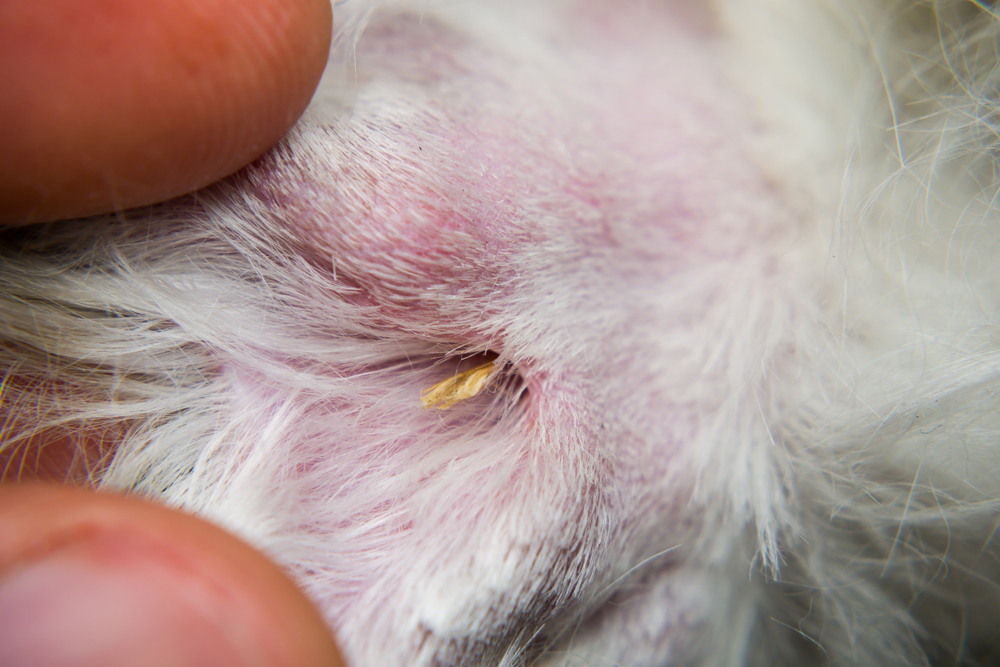
Foxtails are dangerous because of what they do after they attach: they move in one direction only, burrowing forward through fur and into skin and never backing out. In Marin County, where trails run through golden hills that dry out every summer, foxtails are a seasonal fact of life from roughly May through October, and dogs who hike or spend time in unmowed areas are at consistent risk for months at a stretch. An awn that works its way into an ear canal, a paw, or through the skin toward the chest can become genuinely serious, because it does not dissolve and the body’s inflammation does nothing to stop its forward march.
At Fairfax Veterinary Clinic, we see foxtail cases regularly through the summer and have the diagnostics and surgical capability to locate and remove them. We provide emergency and urgent care for pets showing sudden signs, and our collaborative approach means your dog benefits from the shared experience of the whole practice. If you have found a foxtail on your dog or think one may have burrowed in, call us as soon as you can. The earlier you catch it, the easier it is to remove.
Foxtails in Marin, at a Glance
- Season is predictable: Marin foxtail risk runs May through October, peaking once hillside grasses dry and seed heads turn brittle, but foxtail injuries can happen any time of year.
- Geography concentrates the risk: open-space preserves, south-facing slopes, and unmowed lots are the hot spots.
- Awns only travel forward: they never work themselves out, so a small problem becomes a migrating one.
- A two-minute post-walk check is the whole game: catching an awn early keeps it from turning into surgery.
When Is Foxtail Season in Marin County?
Foxtail season in Marin follows the county’s wet-winter, dry-summer rhythm closely. Foxtails are the spiky seed heads of wild barley, foxtail brome, ripgut brome, and similar grasses, and they are harmless and green through the spring. As the rains stop and the hills turn gold, the seed heads dry, harden, and detach easily, which is when they start catching on passing dogs.
By May the awns are fully developed and brittle, and from then through October a dog walking off-trail or through unmowed grass picks them up continuously. Risk drops sharply once the first fall rains return and soften the remaining seed heads. Knowing the calendar lets you tighten your routine for the exact months it matters rather than worrying year-round.
Where Are Marin Dogs Most Likely to Pick Up Foxtails?
Risk in Marin is very location-dependent, so knowing the local hot spots lets you steer around the worst of it. The dry, open, unmaintained areas are where awns concentrate, while coastal and well-kept routes stay relatively low risk even at the height of the season.
| Setting | Summer foxtail risk |
| Open-space preserves with off-trail areas | High |
| South-facing dry slopes and trail edges | High |
| Unmowed backyards and adjacent vacant lots | High |
| Dry grasses lining hillside roads | High |
| Mowed and maintained trails | Lower |
| Coastal trails and well-kept parks | Lower |
Trail systems like Mt. Tamalpais include both higher- and lower-risk stretches depending on the season and how recently an area was mowed, so the same trailhead can be fine in spring and risky by August.
What Makes a Foxtail So Hard to Get Out?
The danger is built into the shape. Each seed head carries rows of backward-pointing barbs, so every step, head shake, or muscle movement ratchets the awn deeper while the barbs lock it against sliding back. There is no mechanism for it to reverse course on its own.
That one-way design is why a foxtail that enters between two toes can end up tracking up the leg, and why an inhaled awn can travel from the nose toward the lungs. The body treats it as a foreign invader and walls it off with inflammation, but inflammation does not dissolve a seed or halt its progress, so the awn keeps moving until something physically removes it.
What Can a Migrating Foxtail Do?
The longer an awn travels, the more it can damage, which is why a same-day foxtail is a minor visit and a week-old one can mean sedation and surgery. The common complications we treat:
- Abscesses and draining tracts form along the migration path, often surfacing as an infected, draining wound a surprising distance from the entry point.
- Otitis externa (ear infection) occurs when an awn becomes lodged in the ear canal, with relentless head shaking, odor, and discharge that only resolve once the awn itself comes out.
- Respiratory trouble follows inhaled awns, starting as sudden sneezing fits and sometimes a one-sided bloody nose, and in deep cases reaching the lungs to cause abscesses or a collapsed lung.
- Corneal ulcers develop fast when an awn lodges under an eyelid, threatening vision within a day or two.
- Gum inflammation and retrobulbar abscesses when awns lodge in the mouth or between gums and teeth.
- Internal foreign bodies result when awns reach the chest, abdomen, or spine, often requiring advanced imaging and surgical exploration to find and remove.
What Signs Should Marin Dog Owners Watch For?
Because awns enter almost anywhere, the warning signs depend on where one landed, and they do not always appear right away. The location-specific tells worth knowing:
- Paws: sudden licking of one foot, limping, or a swollen, oozing spot between the toes
- Ears: violent head shaking, tilting, scratching at one ear, or a new odor
- Nose: a burst of hard sneezing that starts outdoors, sometimes with blood from one nostril
- Eyes: squinting, tearing, redness, or pawing at the face
- Skin and trunk: a lump or draining sore in the armpit, groin, or chest, sometimes weeks later
- Mouth: drooling, gagging, or pawing at the muzzle
These overlap with allergies, routine ear infections, and dental issues, but for a Marin dog recently in dry grass, foxtail injuries belong at the top of the list. Symptoms can also surface a day or several days after the walk, so a dog that develops new limping, sneezing, head shaking, or a draining lump after a summer outing is worth a same-day look even if your post-walk check found nothing.
How Does Fairfax Vet Remove Foxtails?
Foxtails do not resolve on their own, so removal is the only real fix, and how we do it depends on location and how long the awn has been migrating. A visible awn caught in fur or barely under the surface often comes out at a routine visit with a little topical numbing or light sedation. An awn in the ear canal usually needs otoscopic removal, sometimes under sedation when the ear is too painful to handle awake, and a nasal awn nearly always needs sedation and rhinoscopy, since the sneezing makes an awake attempt impossible.
Where there is one awn, there may be more- it’s not unusual to find multiple awns in a draining tract. Awns that have migrated under the skin may need ultrasound to locate before surgical exploration, and more than one seed can hide at a single site. Deep migration into the chest or abdomen calls for advanced imaging and is referred to a specialty facility when it has traveled beyond what we can reach in-house. Because awn wounds are usually infected by the time they are found, cultures, antibiotics, pain control, and recheck visits are typically part of the plan, and early cases are consistently simpler and cheaper to resolve than delayed ones.
How Do You Keep Foxtails Off Your Dog This Summer?
Prevention in Marin is far easier than treatment, and it comes down to steering around the worst areas and checking your dog every time. The habits that matter most through the dry season:
- Stick to mowed or maintained trails during peak season and skip the off-trail, seed-heavy stretches.
- Keep dogs leashed out of dry, seedy grass from May through October rather than letting them crash through it off-leash.
- Trim the fur between the toes, around the ears, and in the groin for the summer, which gives awns less to grab.
- Consider an Outfox hood for dogs who cannot avoid heavy foxtail country, since the mesh shields the ears, nose, and eyes.
- Keep up regular grooming to reduce the loose coat that catches awns, and our grooming service can handle seasonal coat maintenance for higher-risk dogs. Keep hair around faces, ears, and feet trimmed short.
- Mow your own yard and, where you can, keep adjacent lots from going to seed.
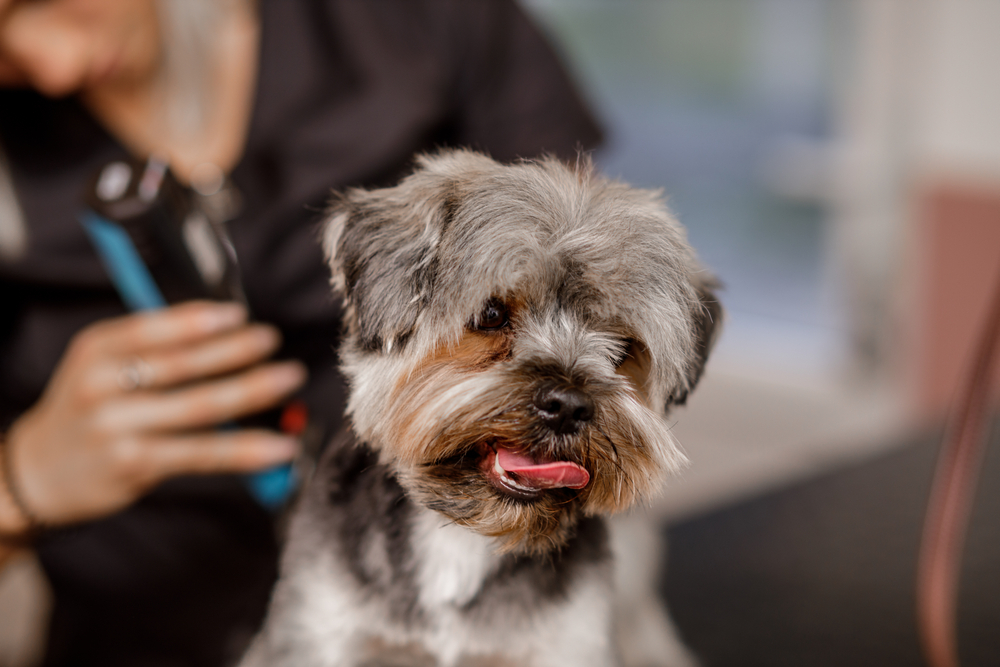
The other half of prevention is the post-walk inspection. Spend two minutes running your hands through the coat and checking each paw between the toes, both ears, around the eyes and muzzle, and the armpits, chest, and groin. Awns hide in the spaces between toes and at the base of the ears, so a deliberate check of those spots catches most of them before they have a chance to burrow.
Frequently Asked Questions About Foxtails in Marin
Can I Remove a Foxtail at Home?
A visible awn resting lightly in the fur can be lifted out with fingers or tweezers. One that is embedded in skin, down the ear canal, under an eyelid, or up the nose needs professional removal, because pulling on a deeply lodged awn can snap it and leave fragments behind that keep migrating.
What if My Dog Doesn’t Seem to Have a Foxtail but Was in Tall Grass?
Run the inspection and keep a close eye for the next few days. If sneezing, limping, a new lump, or persistent licking shows up, come in, since many foxtail cases first announce themselves days later once the awn has started to migrate.
Are Some Areas in Marin Worse for Foxtails Than Others?
Some are much worse. South-facing slopes, open-space preserves with off-trail areas, and unmowed lots are the highest-risk spots, while coastal trails and well-maintained parks tend to be lower risk. The year’s winter rainfall and its timing also shift how heavy and how early the season runs.
A Smart Marin Summer for Your Dog
Foxtail season is part of life here, and a smart summer routine handles most of the risk: mowed trails when possible, a check after every outing, seasonal grooming, and a low threshold for calling when something seems off. The hard cases we treat are almost always the ones where an awn had time to migrate before anyone noticed.
If you have found a foxtail or your dog is showing any sign that might fit the picture, call us or come in. Same-day appointments are usually available during foxtail season, because the timing genuinely matters.



Leave A Comment