


Pet Dental Home Care: What’s Worth Buying (and What’s Just Mint-Flavored Hope)
We all love those snuggle moments with our dogs and cats, but sometimes that close proximity brings an unwelcome surprise: breath that could knock a fly off a wall. Maybe you’ve stood in the pet store aisle overwhelmed by toothbrushes, wipes, gels, water additives, and chews, wondering which products actually work and which are just clever packaging. So what dental home care is actually worth your time and money? The short answer is that consistent mechanical cleaning (brushing, wipes) paired with proven supplemental products makes a real difference, and professional cleanings fill in the gaps that home care can’t reach.
At Fairfax Veterinary Clinic, we partner with you to build practical dental habits that fit your household and your pet’s personality. Our dentistry services cover everything from routine cleanings to advanced care, and you can contact us anytime to plan a personalized approach.
Why Does Dental Home Care Matter for Pets?
Daily plaque becomes tartar within days, and tartar irritates gums and opens the door to deeper infection. Left unchecked, this progression leads to sore mouths, tooth loss, and the chronic inflammation tied to periodontal disease, which can affect the heart, kidneys, and liver. Home care interrupts this cycle early and often so pets can eat, play, and cuddle more comfortably.
Here’s the key balance: home care is powerful, but it doesn’t replace professional dental cleanings. A full cleaning under anesthesia reaches under the gums, polishes tooth surfaces, and uses X-rays to spot hidden problems. We fold oral exams into wellness care and recommend cleaning schedules based on your pet’s age, breed, and oral health.
Is Toothbrushing Really the Gold Standard?
Why Is Brushing the Most Effective Option?
Yes, brushing wins. It’s the most effective home tool because it physically disrupts the bacterial film (plaque) before it hardens into tartar. Daily brushing provides the best protection, but every-other-day routines still offer meaningful benefits. Consistency matters more than perfection, and even a quick 30-second brush is better than skipping it entirely.
How Do You Start Brushing Without a Battle?
Start small, go slow, and reward heavily. Think of it like teaching a party trick with extra treats.
- Help your pet accept gentle face handling for a moment, then reward.
- Lift the lips and touch a tooth with your finger or gauze. Praise and quit while it’s easy.
- Introduce pet-safe toothpaste (never human toothpaste) on a finger.
- Add tools gradually: finger brush first, then a soft-bristled brush.
- Build to 10 to 30 seconds per side, working up to one to two minutes total.
Short, positive sessions built on cooperative care techniques make all the difference. If your pet starts pulling away, end on a good note and try again tomorrow.
What’s the Best Technique for Dogs vs. Cats?
Dogs and cats need the same basic approach, but handling differs quite a bit.
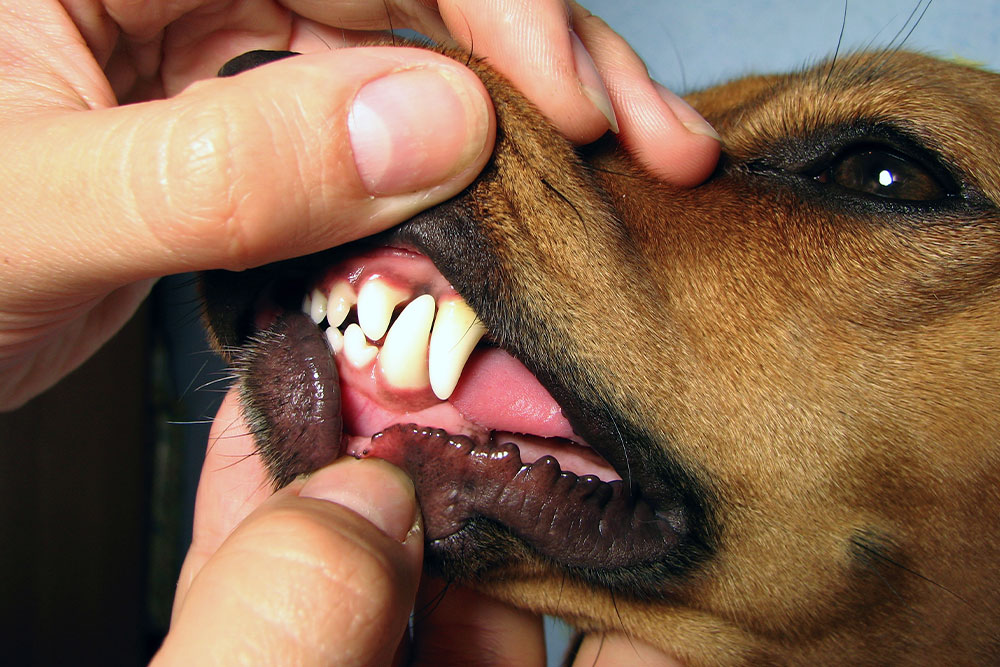
For dogs: Position yourself beside or slightly behind your dog, not face-to-face. Lift the lips and angle the brush at about 45 degrees along the gumline. Work from the back molars forward, focusing on the outer surfaces where tartar builds fastest. Most dogs tolerate longer sessions once they’re used to the routine.
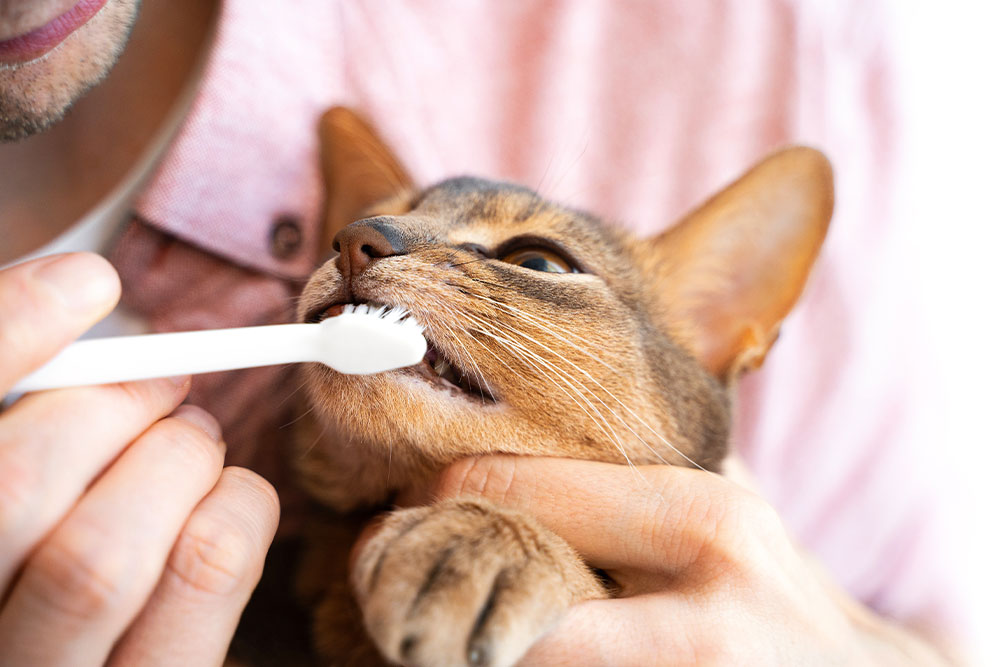
For cats: Smaller mouths and stronger opinions make cat brushing a different experience. Position your cat on your lap or a stable surface and gently cradle the head from behind. Use a small finger brush or cat-sized toothbrush. Keep sessions very short (even 15 to 20 seconds counts) and focus on the outer surfaces of the upper teeth.
We’re happy to demonstrate brushing for your specific pet during a visit with our dentistry team.
Do Dental Wipes and Gauze Actually Help?
They do. For pets who protest brushes, wipes or gauze wrapped around a finger provide useful friction to remove fresh plaque. They’re a great option for cats, small dogs, or anxious pets, and they can serve as a long-term solution or a bridge toward brushing.
To make wiping effective, focus on the outer surfaces of the back teeth and canines, glide along the gumline with small, firm strokes rather than pressing hard, and consider pairing wipes with an enzymatic solution for extra plaque-fighting power. If you see frequent gum bleeding, worsening breath, or brown tartar that won’t budge, it’s time for a professional evaluation. During wellness visits, we examine the mouth and shape a plan your pet will actually tolerate.
What About Dental Gels and Enzymatic Products?
Enzymatic gels help break down bacteria and loosen the film that forms on teeth. You can apply them with a brush, a finger, or simply dab them on and let your pet spread the product with their tongue. Look for veterinary-formulated, enzyme-based products and aim application along the gumlines where bacteria thrive. They work best when combined with brushing or wiping a few times per week, though even standalone use offers some benefit. We can recommend specific options during a dental consultation.
Do Water Additives and Oral Rinses Work?
Some do, and some are just expensive flavored water. Additives and rinses spread antimicrobial or enzymatic ingredients around the mouth and can reduce bacteria and improve breath. They’re convenient, but they should supplement brushing or wiping rather than replace it.
Tips for using them well:
- Introduce new additives gradually to make sure your pet keeps drinking normally
- Understand that additives can’t remove hardened tartar
- Look for VOHC-accepted products with independent evidence behind their claims
- Use rinses for pets who won’t allow brushing, or as a boost between brushing days
If you’re unsure which additive fits your pet’s needs and preferences, our team can help narrow down the options.
Can Dental Diets Make a Difference?
Yes, for some pets. Dental diets are specially formulated with kibble shapes and ingredients designed to scrub tooth surfaces as your pet chews. The larger, fibrous kibble encourages more chewing contact with the tooth, which helps reduce plaque and tartar accumulation.
Dental diets are another useful tool in the toolkit, particularly for pets who resist brushing and wiping. They can extend the time between professional cleanings, but they don’t replace them. Not every pet is a candidate, so talk with us about whether a dental diet makes sense alongside your pet’s current nutrition plan.
Are Dental Chews and Toys Helpful for Oral Health?
Yes, with the right choices. Good chews gently scrape plaque as your pet works on them. Bad ones can crack teeth, cause choking, or lead to intestinal blockages. The difference between helpful and harmful comes down to what you pick.
Skip dangerous chew items like bones, hooves, antlers, and hard nylon. Instead, choose safe chew toys that give slightly under pressure and fit your pet’s size.
How Do You Pick the Right Dental Chew?
Match the chew to your pet’s size, bite strength, and chewing style. A good rule of thumb: if you can’t make a dent with your thumbnail, it’s too hard for teeth. Chewing is a requirement: If they swallow it in two bites, it’s not working.
- Power chewers need resilient but flexible materials that won’t fracture teeth
- Gentle chewers may prefer softer options they can work on slowly
- Start with larger sizes to discourage gulping
- Watch for signs of trouble like heavy drooling, pawing at the mouth, or stomach upset
- Supervise chew time and retire worn or broken pieces before they become hazards
Ask for personalized suggestions at your next wellness exam or dental check.
Why Does the VOHC Seal Matter?
The pet dental product aisle is packed with options that promise cleaner teeth and fresher breath, but not all of them deliver. The Veterinary Oral Health Council (VOHC) is an independent organization that reviews clinical data to determine whether a product actually reduces plaque or tartar. Products that earn the VOHC seal have been tested against specific standards, not just marketed with appealing claims.
The VOHC seal takes the guesswork out of choosing dental chews, water additives, diets, and rinses. If a product carries the seal, there’s real evidence behind it. If it doesn’t, that doesn’t necessarily mean it’s useless, but you’re relying on the manufacturer’s word alone.
When in doubt, start with VOHC-accepted products and ask your veterinary team which ones make sense for your pet’s size, chewing style, and oral health status.
What Can Home Care Not Do?
Home tools can’t remove hardened tartar or treat disease below the gumline. Even the most diligent brushers need periodic professional cleanings. A complete procedure under anesthesia safely scales and polishes above and below the gums and uses dental X-rays to detect hidden problems.
A quick caution: so-called cleanings without anesthesia often miss tartar below the gumline and can be stressful and incomplete. There are significant anesthesia-free dental risks that pet owners should understand. With strong home care, professional cleanings are typically needed less frequently. To discuss timing for your pet, reach out to our dentistry team.
How Do You Build a Dental Routine You Can Actually Keep?
Start with the smallest step you can repeat most days. Pair mouth care with an existing habit, like after dinner or before bedtime, and celebrate micro-wins.
A simple weekly framework:
- Brush daily if possible. Every other day still helps.
- On non-brushing days, use wipes or gauze with an enzymatic product.
- Offer a dental chew daily.
- Use a VOHC-accepted water additive if your pet tolerates it.
- Check gums weekly for redness, odor, or discomfort and note any changes.
If your pet hates the toothpaste flavor, try a different one- there are a lot of great options like poultry, seafood, and beef flavors. If mornings are chaotic, switch to evenings. If brushing is a non-starter, commit to wipes and build from there. The moral of the story is that anything is better than nothing. We fold dental planning into your pet’s bigger health picture during wellness visits and adjust for age, breed, and ongoing conditions.
Frequently Asked Questions
How often should I brush my pet’s teeth?
Daily is ideal. Every other day still provides meaningful protection. Even three times a week is far better than not brushing at all.
Can I use human toothpaste on my pet?
Never. Human toothpaste contains fluoride, xylitol, and foaming agents that are toxic to pets. Always use a pet-formulated enzymatic toothpaste.
My cat won’t let me brush. What can I do?
Start with wipes or gauze, which many cats tolerate better. Pair every session with a treat and keep it under 20 seconds. Enzymatic gels that your cat licks off a finger are another low-stress option.
How do I know if a dental product actually works?
Look for the VOHC (Veterinary Oral Health Council) seal. Products with this designation have been independently tested and shown to reduce plaque or tartar.
When does my pet need a professional cleaning instead of just home care?
If you see brown or yellow buildup that doesn’t improve with brushing, persistent bad breath, red or bleeding gums, or loose teeth, it’s time for a professional evaluation under anesthesia.
Partnering for a Lifetime of Healthier Smiles
Every small effort counts. Brushing, wipes, gels, dental diets, water additives, and smart chews all contribute, and they work best alongside periodic professional cleanings. Our team at Fairfax Veterinary Clinic keeps visits calm and collaborative so you and your pet feel supported every step of the way.
If your pet’s breath has changed, if you’re seeing buildup along the gumline, or if you just want a plan you can stick with, our dentistry services are a great next step. Contact us to schedule a dental exam or a brushing demonstration. We’ll help you find the routine that keeps those close-up snuggles pleasant for everyone.




Leave A Comment