


At Fairfax Veterinary Clinic in Fairfax, California, we talk about teeth every day.
We know how easy it is to look at a bright white smile after a grooming visit and think, “Great, my pet’s mouth is in good shape!” In reality, a quick scrape on the surface can hide serious disease brewing under the gumline. Below, we explain why a full cleaning under anesthesia is the gold standard for oral health, address the worries you may have about anesthetic safety, and share practical tips you can start at home today.
What a “Quick Scrape” Misses
Non-anesthetic dental cleanings (often advertised as NAD or NADC) promise a shiny smile without the perceived risks of anesthesia. Because 60–70 % of each tooth sits below the gumline, a surface polish tells us very little about true oral health.
Imagine trying to judge the health of a tree by painting its trunk while ignoring rotting roots. The tree looks pretty for a while, but the problem keeps spreading. In the mouth, that “root rot” leads to pain, bone loss, and even whole-body infection.
The Veterinary Perspective: Why We Insist on Anesthesia
During an anesthetized procedure we can:
- Perform subgingival scaling to remove plaque you can’t see.
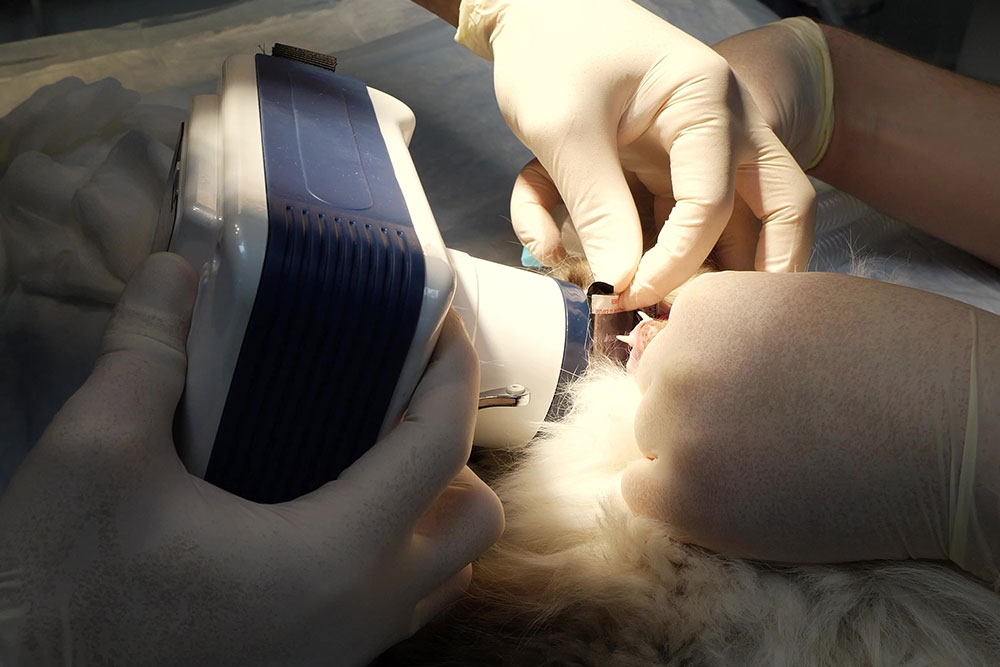
- Obtain full-mouth X-rays to spot hidden problems. The Importance of Dental X-Rays for Pets – Preventive Vet summarizes how many diseased teeth look normal on the surface.
- Use water irrigation and suction while protecting the airway with an endotracheal tube.
- Polish the enamel so that new bacteria do not grab onto microscopic scratches left by scaling.
- Apply sealants and fluoride if needed.
The result is a truly clean mouth and an accurate dental record that lets us track problems early.
Keeping Anesthesia Safe
Safety starts before we turn on the anesthesia machine. We run pre-operative bloodwork, tailor drug choices to any existing conditions, and assign a licensed technician to monitor heart rate, oxygen levels, blood pressure, and body temperature from induction to recovery. Guidelines like Anesthesia and Dental Cleaning for Pets – AAHA help us refine every step. While no medical procedure is risk-free, modern veterinary anesthetics are remarkably safe—often safer than letting dental disease smolder for years.
What Untreated Disease Looks Like Over Time
Stage 1: Gingivitis—red, swollen gums and bad breath.
Stage 2–3: Pocketing around teeth, loose crowns, pain when chewing.
Stage 4: Bone loss, abscesses, possible jaw fractures in small breeds.
Bacteria from advanced periodontal disease can enter the bloodstream and worsen heart, liver, and kidney issues. Resources such as Healthy Mouth, Healthy Pet: Why Dental Care Matters detail these systemic links.
Recognizing pain in pets can be tricky—they rarely cry out. Watch for dropping food, chewing on one side, pawing at the face, or suddenly preferring soft food.
How Dental Disease Intersects with Other Conditions
- Small-breed dogs are predisposed to crowding; Guide to Dental Disease in Small Breed Dogs – Royal Canin outlines why they often need professional cleanings earlier.
- Toy breeds retain baby teeth, trapping food and bacteria—see Trouble with Toy Teeth – AKC.
- Persistent deciduous canines may require extraction (Deciduous Canine Tooth Removal in Dogs – Today’s Veterinary Practice).
- Malocclusion causes abnormal wear; ABCs of Veterinary Dentistry: Malposition and Malocclusion – DVM360 highlights corrective options.
- Inflammatory mouth diseases, oral tumors, and gingival overgrowth (Oral Tumors of Small Animals, Oral Inflammatory and Ulcerative Disease in Small Animals – Merck Vet Manual, Gingival Enlargement in Dogs – Cornell Canine Genetics Lab) are best diagnosed while the patient is anesthetized, allowing biopsies without stress.
- Developmental issues such as cleft palate (Cleft Palate in Pets – Embrace Pet Insurance) and abnormal tooth eruption (Developmental Abnormalities of the Mouth and Dentition in Small Animals – Merck Veterinary Manual) demand a thorough oral exam no awake pet will tolerate.
At-Home Habits That Make a Difference
We love seeing clean charts at recheck visits, and daily care is how you get there. The Veterinary Oral Health Council – VOHC maintains a list of products proven to slow plaque. Look for their seal when choosing chews, diets, rinses, or water additives.
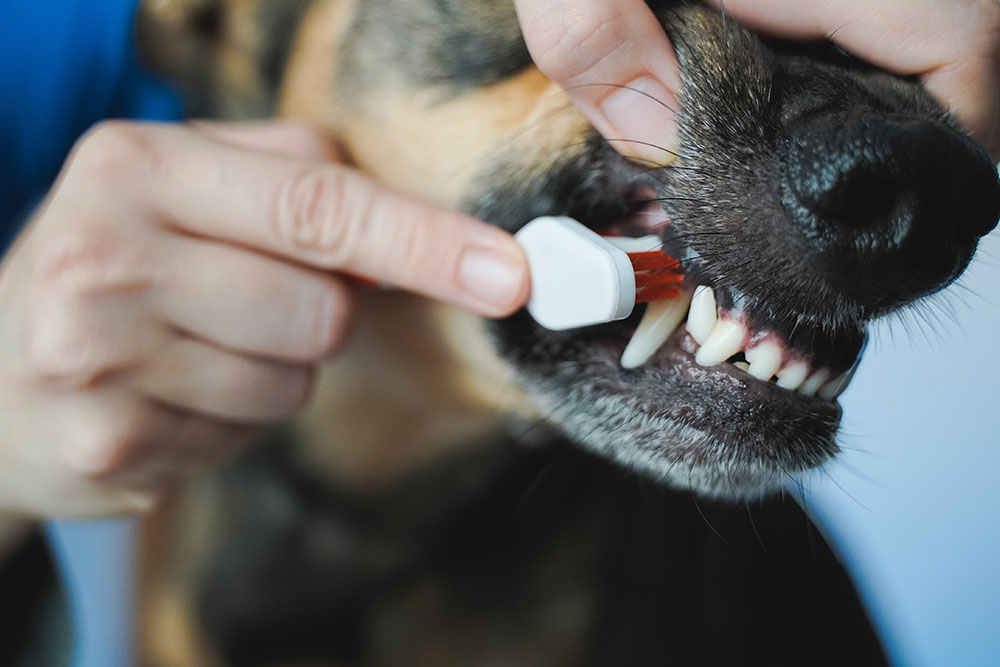
- Toothbrushing: Use a pet-safe enzymatic paste. Work up to gentle circular strokes along the gumline.
- Dental wipes: For pets who won’t accept a toothbrush, wipes mechanically remove plaque.
- Food puzzles and rubber chew toys: Encourage natural abrasion while reducing boredom.
- Diet: Some therapeutic diets have a fiber matrix that scrubs the tooth as the kibble breaks.
- Routine checks: Lift the lip weekly. Note odor, discoloration, or bleeding and call us if anything changes.
Recognizing When It’s Time to Book a Professional Cleaning
- Visible yellow or brown tartar, especially near the gum.
- Red or bleeding gums.
- Change in appetite or chewing habits.
- Drooling or dropping food.
- Facial swelling or nasal discharge.
Even if none of these signs are present, most adult pets benefit from cleanings every 12–18 months. We tailor recommendations after examining your pet and reviewing risk factors.
Frequently Asked Questions
Is anesthesia safe for seniors?
Age alone is not a disease. We adjust protocols based on bloodwork and any heart, kidney, or liver findings. Many of our patients are over ten years old and recover smoothly.
How long is my pet under anesthesia?
For an uncomplicated cleaning, 30–60 minutes. Extractions or X-ray-guided procedures may take longer, but pets are continuously monitored.
Will my pet be in pain afterward?
Scaling and polishing are painless; if extractions are needed, we use nerve blocks and send home medication. Most pets eat dinner the same evening.
How can I afford regular cleanings?
Budgeting for preventive care is far less costly than treating advanced disease or emergency extractions. Pet insurance wellness riders and payment plans can help.
Can’t antibiotics replace a cleaning?
Medication reduces bacteria temporarily but cannot remove tartar or diseased tissue. Over-reliance fosters resistance and masks pain.
For more general information, Pet Dental Care – AVMA offers an excellent overview.
A Partnership for Lifelong Health
We see ourselves as your teammates in protecting every tooth from the first puppy exam to the golden years. You can meet the doctors and nurses who will be caring for your pet on our team page. If you have questions—big or small—please reach out through our contact form or request an appointment online at Fairfax Veterinary Clinic. Together, we’ll make sure every cleaning is safe, thorough, and leaves your pet feeling their best.


Leave A Comment